

Why traditional automation is struggling to keep up today
As development moves from monthly to daily releases, frequent updates to features, APIs, and interfaces constantly threaten to break conventional test suites.
Traditional automation was made for a slower pace. These systems are fragile because they rely on fixed locators, hardcoded flows, and scripts that expect the app to look the same every time.
Whenever systems shift, someone must rewrite the code. That is precious development time spent just retaining the status quo, rather than innovating or moving the product forward.
Businesses need an intelligent testing system that automatically updates with the app, handles larger workloads free of crashing, and eliminates the need for constant maintenance.
- Expand large, multi-level business systems effortlessly while keeping them stable.
- Automatically adapt to interface updates and backend changes.
- Reduce testing maintenance to free up valuable QA time.
- Give release teams true peace of mind, not just a passing dashboard.
Design for governance and traceability from the start.
To make this practical, let us look at exactly how that works.
What Autonomous QA Actually Is
The term gets thrown around a lot. Here is my working definition: Autonomous QA is a testing method in which AI systems independently create, execute, and update tests, adapting to software changes without human intervention.
The keyword is reason. Basic tools just follow steps; smart systems grasp the situation, spot changes, and choose the best path forward. That is the difference that matters.
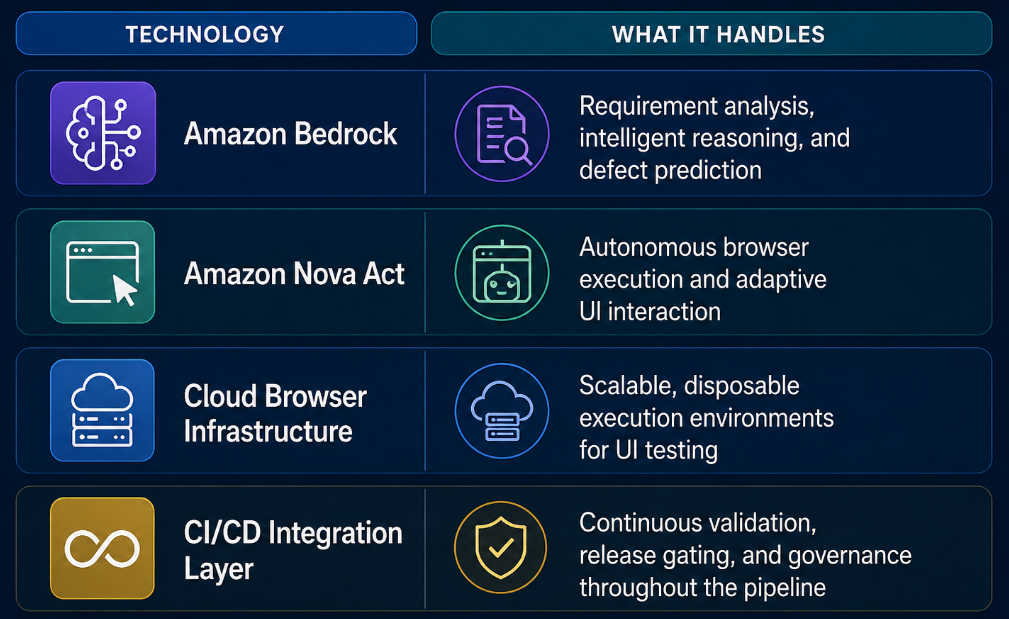
The Six Phases — And What’s Actually Happening in Each One
Here is how the framework flows from start to end: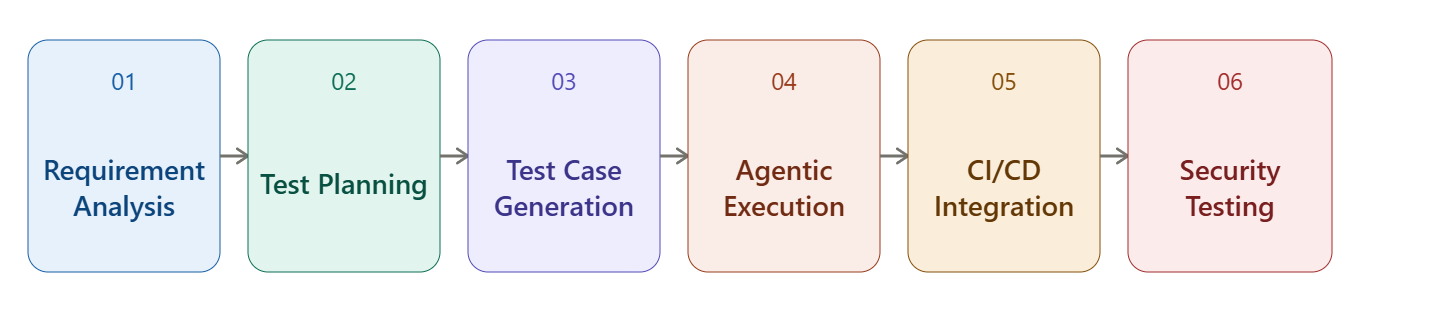
Phase 1: Understanding exactly what is needed before writing any tests
The root cause of most testing issues
I will be direct,our production bugs are usually not coding mistakes ,they are the result from vague requirements that everyone interprets differently.
In Phase 1, the AI reviews all required documents to identify issues before development begins.
- Flag requirements are statements that cannot be objectively verified.
- It lacks proper checks and misses a few edge cases.
- Identify the high-risk processes that require more attention.
- Creates traceability so every test traces back to a specific requirement.
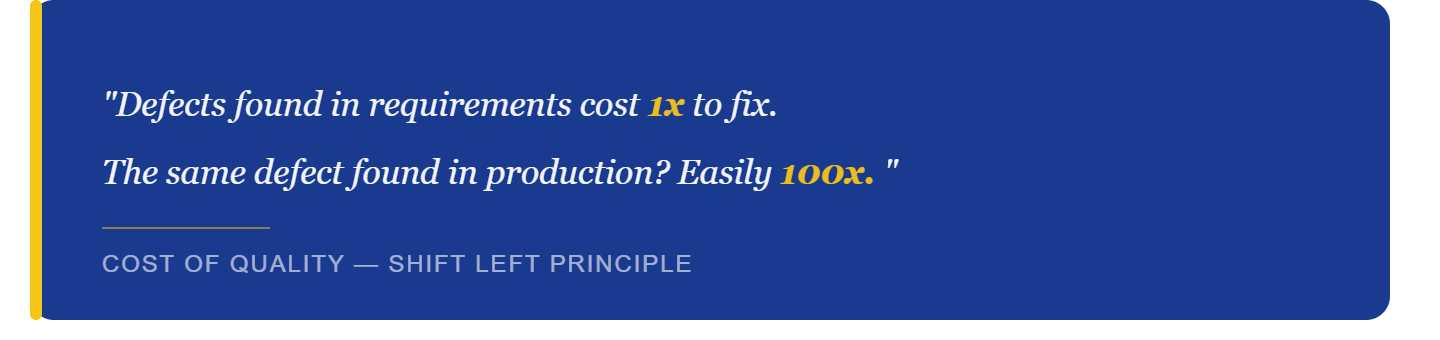 This phase completely changes the cost of testing. Catching a bug early in a planning meeting takes minutes, but fixing it after the software is released takes weeks—assuming your users do not find it first.
Phase 2: Test Planning That Does not Require a committee
Risk-driven, automated, and dynamically updated to fulfill changing demands.
Traditional test planning involves spreadsheets, endless prioritisation discussions, and pointless meetings that could easily have been emails. It drains days of effort—only to have requirements change mid-sprint and force the whole exhausting process to start over.
The autonomous engine plans everything in minutes. It focuses heavily on high-risk tasks while scaling back on stable ones. It updates itself automatically when needs change, completely removing the necessity for manual work.
What this frees up: Free your senior QA engineers from admin tasks so they can focus on what matters most: exploratory testing, edge-case analysis, and architectural risk reviews.
Phase 3: Test cases written by a comprehensive and reliable source
EDGE CASES, NEGATIVE SCENARIOS, AND BOUNDARY CONDITIONS — ALL OF THEM
Under sprint stress, teams ship the major features and a few quick fixes, deferring the complex edge cases to a ‘next sprint’ that never arrives.
AI works without pressure, delivering complete test coverage—from edge cases to security checks—without missing a deadline or cutting corners.
The difference in coverage is real. While an experienced QA engineer manually crafts 15 to 20 detailed test cases daily, AI can instantly produce hundreds of ready-to-run, requirement-aligned, and perfectly formatted tests.
Phase 4: Self-driven execution
The upgrade that completely transforms how you maintain things.
The idea of an agent operating the UI on its own was a tough sell for me. After watching countless automation setups shatter just because a button shifted, I was highly doubtful.
But agentic execution is different in one important way: The genuine magic of agentic execution is its adaptability. Instead of crashing when something unexpected happens, the agent automatically reroutes and adjusts, making your automation extremely resilient.
- Instead of breaking when page layouts change, these tools intuitively see and click web elements just like a human would.
- Manages API requests and validates responses intelligently.
- Instantly spots and fixes database errors.
- Keeps running smoothly, even as the app updates.
The practical result: Automate your maintenance so your test suite practically runs itself.
Phase 5: Every Commit Gets Tested — Not Only the Big Ones
CI/CD INTEGRATION WITH REAL GOVERNANCE BUILT IN
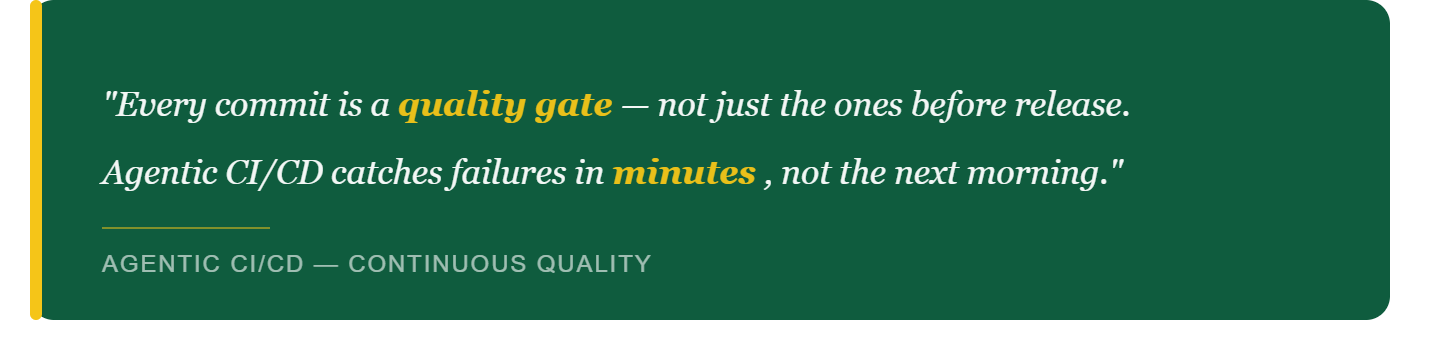 Most CI/CD pipelines have automated tests. But there is a continuous gap: when a test fails, someone still must manually investigate the cause and file a ticket.
When a test fails, the agent automatically creates a Jira ticket with all the details—logs, screenshots, and the exact commit. Developers get everything they need to fix the bug instantly, cutting out the scavenger hunt.
When a critical error happens, the system automatically halts the release and alerts the team, saving everyone from late-Friday stress.
Move fast without breaking the rules. Our governance layer adds built-in checks, so every release is both rapid and compliant.
Phase 6: Security Testing That Does not Wait Until the End
OWASP COVERAGE ON EVERY BUILD — NOT ONCE PER QUARTER
Security testing’s dirty secret is that teams do it too late. Treated as a separate track near the end of the release cycle, finding a vulnerability at this stage means unpicking code that has already been reviewed, merged, and tested.
In this system, we scan every build for threats such as SQL injection and the OWASP Top 10 to catch vulnerabilities early in development. It is much cheaper to fix a bug while you are coding than it is to deal with a security breach later.
The business case is clear: Catching a bug during a pull request takes an hour; catching the same bug in production can cost millions and destroy years of customer trust.
Self-Healing Tests: The Part That Actually Surprised Me
I want to spend a moment on this because it is the capability that changed my view of what autonomous testing could be.
In most automation programs, Code is built to last, but automation is built to adapt. Fail to update your scripts, and your test suite will quickly become an ignored relic.
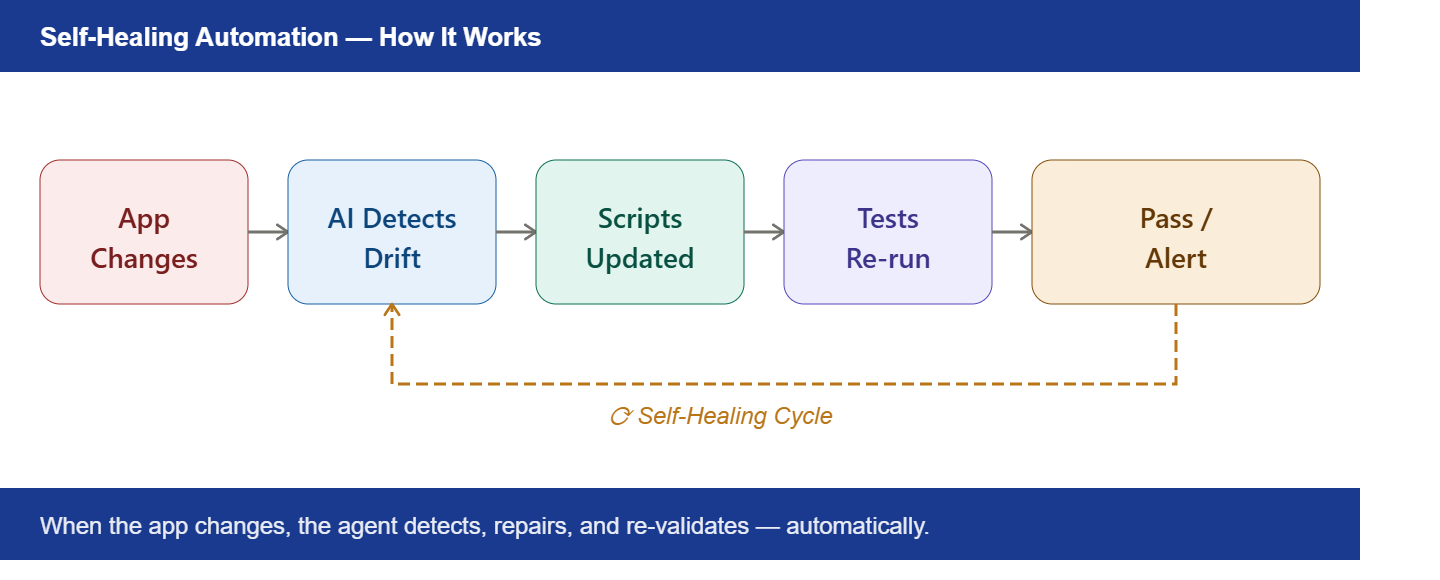 Self-healing automation breaks that pattern. Whenever your app changes, the AI agent instantly detects the updates—like tweaked UI flows, API shifts, or renamed buttons. It then automatically fixes the broken scripts and re-runs the tests to make sure everything works perfectly.
While you will still need human insight for big changes, it handles the repetitive, time-consuming busywork that silently burns out your team.
“Most automation programs do not die from lack of effort. They die from maintenance debt. Self-healing is the answer to that.”
What This Looks Like in Practice
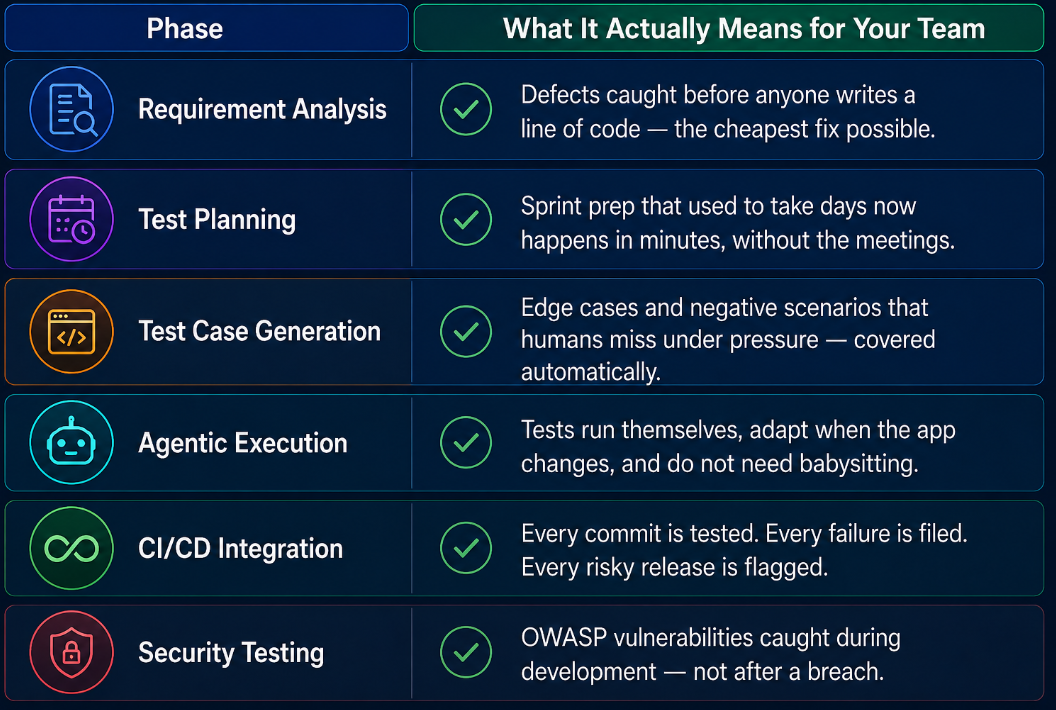
Here is a plain-language summary of what changes at each phase when this is running:
Where QA Engineering Is Heading — Honestly
It took the industry ten years to swap manual testing for coded scripts. Now, the shift to autonomous QA is moving at lightning speed—fuelled by the need to launch software faster with smaller teams.
The platform adapts with every project, predicting risks better than before and securing valuable knowledge within the company.
The longer you wait, the harder it gets. Technical debt builds up, tests break, and maintenance traps engineers in a slow cycle of fixing instead of improving.
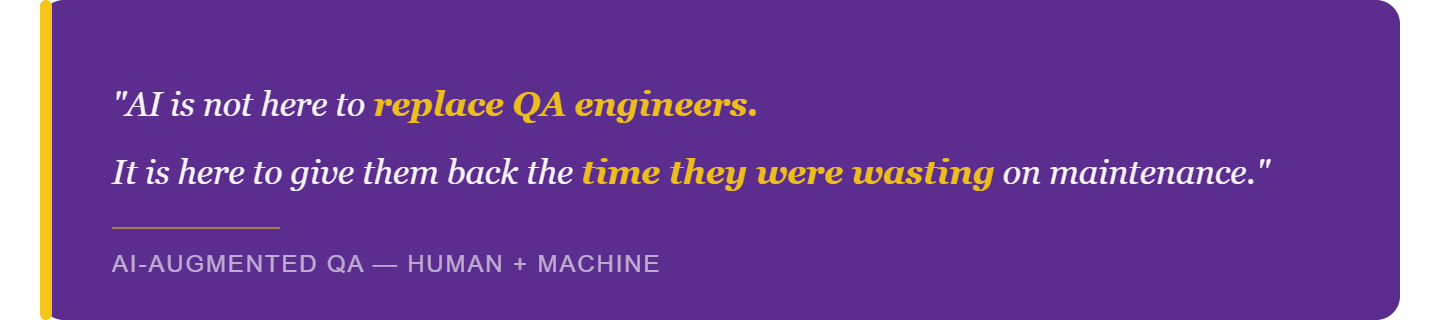
One thing I want to be clear about: Instead of replacing QA engineers, AI handles the tedious, repetitive tasks—giving them more time to focus on complex, high-level problem-solving.
Let the machines handle the repetitive chores, while humans focus on the creative strategy. That upgrades our roles rather than downgrading them.